

“A Chekhov Circus” is a story-by-story breakdown of the 201 Chekhov tales translated by Constance Garnett in the early 1900s, a project that spanned some seven years and ended up filling 13 volumes in all.
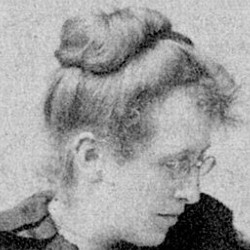
Garnett was a brilliant translator and, because she lived roughly at the same time as Chekhov, her language is ever-so-slightly outdated, as I imagine Chekhov’s own language would read in the original Russian. I prefer her translations to others I’ve read, although I can’t recall reading a bad translation. It’s just that Garnett did the job so well, and I was already familiar with her voice from earlier readings, and, most importantly, her selected 201 stories have become, in essence, the Chekhov canon. So that’s the basis for this site.
Sadly, the complete 13 volume set is not currently in print. I have a used set that I love–the Ecco Press edition–and these can be found and purchased online, although they ain’t cheap. The good news is that the copyright on Garnett’s translations has expired, so the complete set is widely available online (Project Gutenberg and elsewhere) or in Kindle editions on Amazon–for free or nearly so. It’s sort of amazing: You can acquire a Kindle edition of the entire set of stories, 13 volumes and 201 stories, for $9.99, with a hyperlinked table of contents and, even better, the ability to search for individual words and phrases.
This is the Kindle edition I used. There are others on Amazon but they seem cheesy to me (some don’t even credit the translator!)
Of course, you can also find print editions of “selected” stories, some translated by Garnett, some not. If you are not reading Garnett’s translations, be aware that the titling varies widely from edition to edition. For instance, what Garnett titles “An Artist’s Story,” others call “The House With the Mezzanine.” (Typical for Chekhov, both titles stink!)
For biographical information, I relied on Donald Rayfield’s incredibly detailed “Anton Chekhov: A Life” (Faber & Faber, 2013).
Also extremely useful (and entertaining) is “A Life in Letters,” a collection of about 370 of Chekhov’s letters, edited by Rosamund Bartlett and translated by Anthony Phillips (Penguin Classics, 2004).
Constance Garnett, too, translated a boatload of Chekhov’s letters (he wrote more than 4,000), and, like her translations of his stories, these are now freely available and useful to consult.
A biography of Garnett herself was also useful: “Constance Garnett: A Heroic Life,” by Richard Garnett (Faber & Faber, 2009).
To read stories beyond the “Garnett canon,” I recommend:
- “The Undiscovered Chekhov,” a collection of stories and magazine occasionals translated by Peter Constantine (Seven Stories Press, 2000).
- An out of print collection, “Late Blooming Flowers and Other Stories,” (translated by I.C. Chertok and Jean Gardner, McGraw Hill 1964) is also useful, especially for the title story, which is pretty dreadful but interesting as a foundational work by a very young Chekhov. Used editions are readily available and not too pricey.
- A relatively new volume of translations by Richard Pevear and Larissa Volokhonsky, “Fifty-Two Stories,” (Vintage, 2021), includes a handful of tales not translated by Garnett.
Finally, I would like to mention two Chekhov sites that I enjoyed looking at while I worked on my own. The first is “Chekhov, Anyone?”, a very personal and generous reading of the stories. The other is Prospero’s Isle, which has a lot of information about the “core” Chekhov stories as well as a lot of interesting stuff (and some full texts) of lesser known, early works.

 A Chekhov Circus